
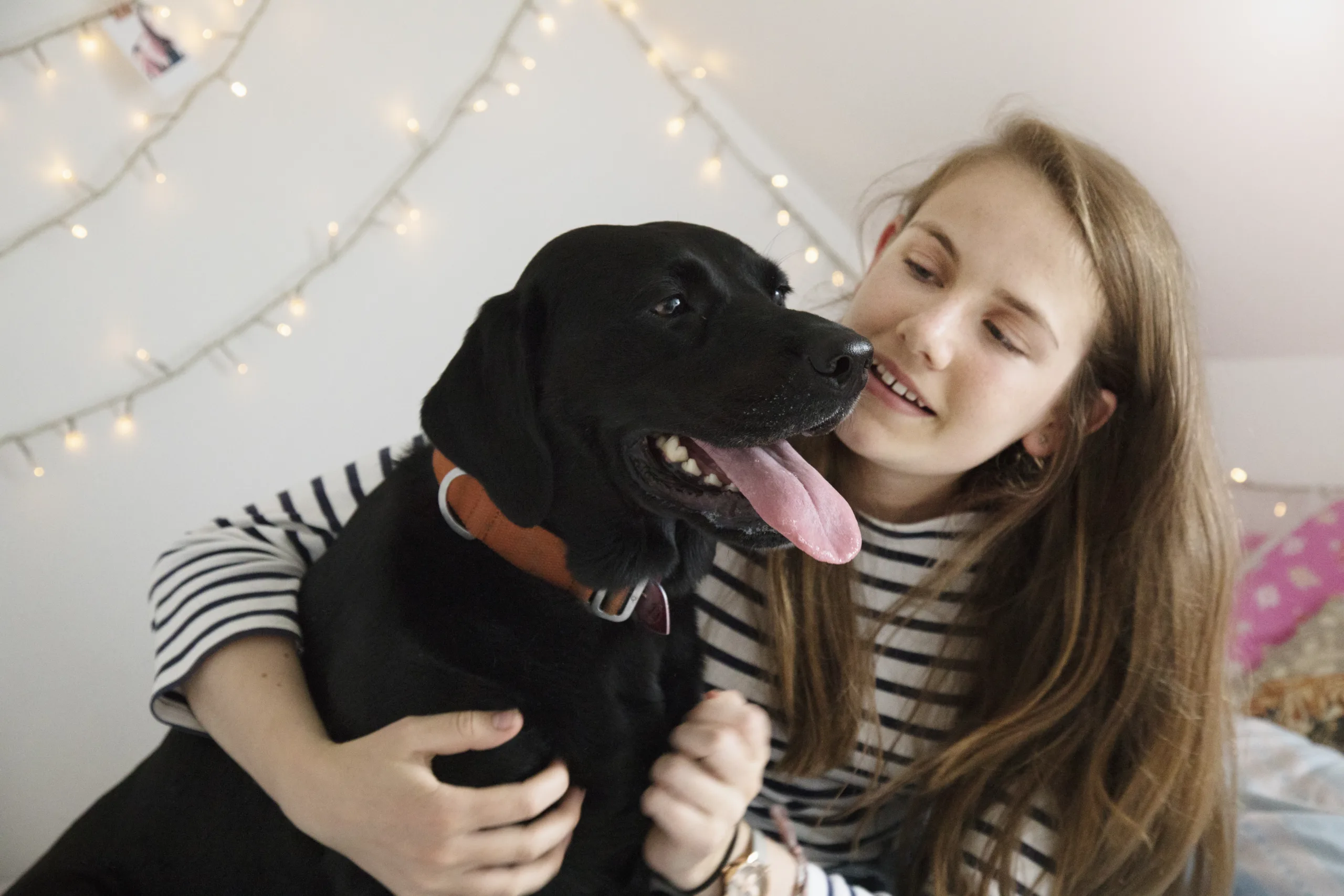
Animals have played a meaningful role in human wellbeing for centuries, and over the last few decades interest in animal‑assisted support for individuals diagnosed with autism spectrum disorder (ASD) has continued to grow.
It is important to understand that animal‑assisted approaches are not a replacement for established evidence‑based interventions such as applied behavior analysis (ABA). These approaches are best viewed as potential supports that may be helpful for some individuals, in some situations and under the right conditions.
When animals are included as part of someone’s care plan, it is important that:
- Goals are clearly defined and measurable
- Activities are coordinated with the person’s overall support plan, including ABA, speech and occupational therapies, behavioral health services, and other relevant providers as needed
- Families receive realistic information about what is and is not known from research
History of animal-assisted support
Animals have appeared in hospitals and care settings since at least the 18th and 19th centuries, though early uses were informal and rarely studied. Modern animal‑assisted support grew in the 1960s and 1970s when researchers, including Dr. Boris Levinson, began documenting how dogs might support communication and engagement for children with special needs.
Interest in ASD specifically increased in the early 2000s. Studies began to ask questions such as:
- Do therapy dogs or horses change social behavior during sessions?
- Do physiological stress indicators shift during or after interactions with animals?
- Can animals support motivation to participate in therapeutic activities?
What the research suggests and where it is limited
Overall, the evidence base is promising but not conclusive. Many studies report positive outcomes, but common limitations such as small sample sizes, short timeframes, lack of control groups and varied program designs make it difficult to draw firm conclusions. Findings include:
- Social engagement may increase with a support animal present
- Reductions in stress markers when a support animal is present during structured therapy sessions
- Motivation and engagement in skill development increases when a support animal is involved
The field is continuing to grow, but for now, a cautious, informed approach helps families and professionals make decisions that align with each person’s unique needs and goals.
Potential use cases for animal support
Even with research limitations, animals can complement support for individuals diagnosed with ASD, even when not incorporated into structured therapy sessions. It is also important to understand the difference between companion and support animals versus service animals.
Companion animals
Companion animals, such as family pets, are part of the home environment. While their role is not clinical, some individuals diagnosed with ASD may experience comfort, routine and companionship from living with a pet. Research on pets in the home for ASD shows mixed results, as it can be difficult to separate the animal’s impact from broader family dynamics and daily routines.
Service animals
Service animals are trained to perform specific tasks for individuals with disabilities. For ASD, this may include supporting safety, alerting caregivers to signs of overstimulation or anxiety or helping redirect behaviors. Service dogs require significant time, training and financial commitments, and families often review multiple programs before applying.
Whether a family is considering a pet in the home or exploring a service animal, thoughtful planning and realistic expectations help support choices that align with each person’s needs, preferences and daily routines.
