
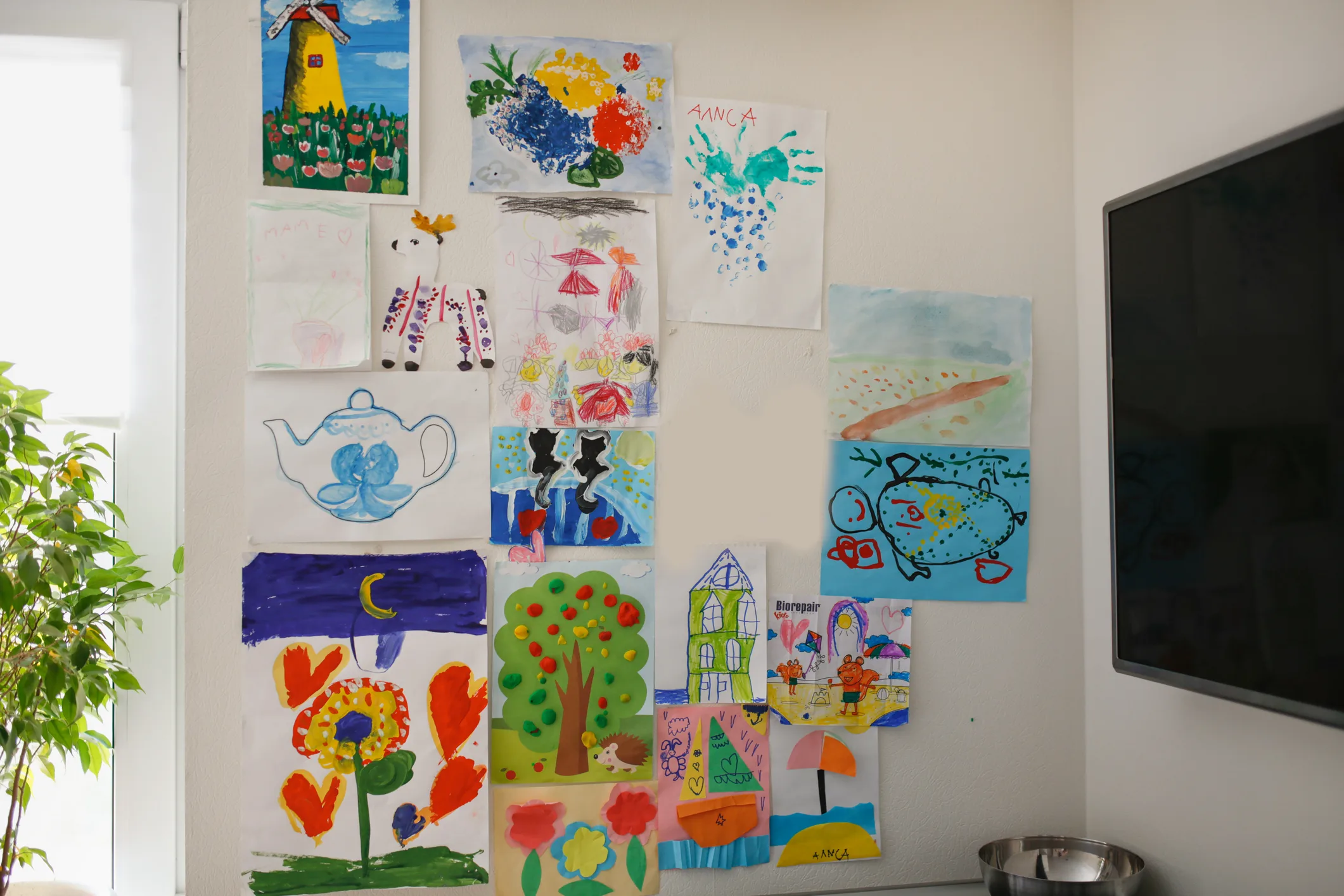
Every child has something to say. Not every child has an easy time saying it in words. For many children with autism spectrum disorder (ASD), creative activities offer something that everyday communication sometimes cannot: a way to express feelings, connect with others, and experience the satisfaction of making something.
The research backs this up. A 2024 systematic review published in The Arts in Psychotherapy found consistent improvements in emotional expression, social interaction, sensory regulation, and adaptive behavior across creative arts modalities for children with ASD. A 2025 review in Family Relations confirmed those benefits are especially strong when families are involved. At Maxim Healthcare’s behavioral division (“Maxim Behavioral”), we want to help families find the creative outlets that work best for their child. Here are five worth exploring.
Visual art
Visual art is one of the most accessible creative outlets for children with ASD because it requires no verbal communication and can be adapted to any ability level. A 2024 systematic review in the International Journal of Art Therapy found meaningful improvements in emotional expression, social interaction and sensory regulation for children and adolescents with ASD, with particularly strong benefits for those with limited verbal communication. Many children on the spectrum are strong visual and spatial thinkers, and drawing, painting, collage and sculpture give those strengths a natural and purposeful outlet.
To get started at home, set up a simple creative space with paper, paint, markers and clay. Let your child lead and resist directing them toward a specific outcome. The process matters more than the product. If your child is working with an applied behavior analysis (ABA) therapist, ask about building visual art into their goals.
Music
Music is the most extensively researched creative modality in relation to ASD. A 2024 systematic review of nine randomized controlled trials involving 1,327 children published in PMC found significant improvements in social communication skills, verbal production and emotional responsiveness. A 2025 randomized controlled trial in Frontiers in Psychology found that a 12-week music intervention including rhythm training, singing and instrumental improvisation produced meaningful social skills gains in children aged 3 to 6. Research also shows that music and language share overlapping neural processing pathways, meaning rhythm and melody work can directly support language development.
Music does not have to mean formal lessons. Sing during daily routines. Tap rhythms together. Explore child-friendly instruments like drums or xylophones. Many children with ASD respond powerfully to rhythm, so even simple clapping and drumming games are a meaningful place to start.
Drama and theater
Drama therapy uses role-playing, storytelling, and improvisation to support emotional and social development. For children with ASD, it offers structured permission to be someone else for a while, exploring emotions and practicing social interactions through a character rather than as themselves. Drama therapy reduces anxiety, enhances sensory integration, and builds a stronger sense of identity. The SENSE Theatre program, one of the most studied drama interventions for ASD, places children with ASD alongside neurotypical peers in rehearsals and performances, producing improvements in social communication and emotional recognition that carry over into everyday life.
Look for community theater programs or drama camps with experience including children with ASD. At home, try simple role-playing with puppets or stuffed animals, acting out scenes from favorite books or shows and inviting your child to make up their own characters and stories.
Dance and movement
Dance and movement therapy supports emotional regulation, sensory integration and social connection through physical expression. The 2024 systematic review in The Arts in Psychotherapy specifically noted that dance movement therapy reduces restricted repetitive behaviors and enhances social skills in children with ASD. Rhythmic movement is also deeply regulating for many children who experience sensory processing differences, providing the proprioceptive input their nervous systems crave. Group movement activities naturally build turn-taking, imitation, and joint attention, all core skills in ASD development.
Dance does not have to be formal. Put on music your child loves and move together. Try mirroring games where you copy each other’s movements. Look for sensory-friendly dance or yoga classes in your community, or explore trampolines and balance boards at home for children who love active movement.
Creative writing and storytelling
Storytelling gives children with ASD a way to make sense of the world, explore social situations from a safe distance, and practice sequential thinking. Many children on the spectrum have deep interests in specific topics, and creative writing channels those interests into a skill-building activity. For children who are not yet writing independently, dictating stories to a caregiver, using speech-to-text tools, or creating picture comics are equally valid. Research highlighted by a ScienceDirect study on autistic creativity found that autistic individuals demonstrate an extraordinary capacity for imaginative thinking, a strength storytelling is uniquely positioned to develop.
To get started, ask your child to tell you a story and write it down exactly as they say it. Read it back to them. Let them illustrate it. Social stories, short narratives that walk children through specific social situations, are also a widely used and researched tool in behavioral health settings. Ask your child’s Board Certified Behavior Analyst (BCBA) about incorporating narrative goals into their treatment plan.
Creative outlets and ABA: a natural fit
Creative activities are not a replacement for evidence-based behavioral therapy, but they are a powerful complement to it. When a child practices turn-taking in a music group, they are generalizing a skill from their ABA sessions. When they express a feeling through a painting or play a character in a drama exercise, they are using communication and perspective-taking skills in a real-world context. If your child has a creative interest, share it with their BCBA. There may be more opportunities than you expect to build therapy goals around the activities your child already loves.
At Maxim Behavioral, we are committed to providing compassionate, highly specialized support that meets the complex needs of individuals with ASD and offers families the understanding, guidance and uplift they deserve. If you’re looking for guidance or want to learn more about ASD supports available through Maxim, don’t hesitate to reach out to your local office for more information.
