

Did you know there are different ways to refer to individuals with disabilities? Words and language are powerful tools to express ideas, and the difference between person-first and identity-first language is not something to brush over. The end goal of inclusive language is respect, regardless of preference.
In this article, we break down the differences between these language types, how it applies to individuals with autism spectrum disorder (ASD) and what you can do to be an active supporter of all people with disabilities.
What’s the difference?
Person-first language refers to an individual first and their identity characteristic second. For example, “person with ASD.” Some people may prefer person-first language to emphasize that they are not defined by their disability or to show their disability is a part of them. Person-first language avoids defining someone by labels and is a way to destigmatize language overall. Publications commonly use person-first language when they must generalize a population in references.
Identity-first language refers to someone’s identity first and themselves second. For example, “autistic person.” Some people may prefer identity-first language to emphasize how their disability is a part of who they are and emphasize how their disability shapes their experiences. Many individuals with ASD prefer identity-first language. Some feel ASD is inseparable from who they are as a person and would like to show pride in this aspect of their identity.
The Autistic Self Advocacy Network is a big proponent of identity-first language, stating: “when we say, ‘autistic person,’ we recognize, affirm and validate an individual’s identity as an autistic person. We recognize the value and worth of that individual as an autistic person — that being autistic is not a condition absolutely irreconcilable with regarding people as inherently valuable and worth something.” By some people choosing to use the term ‘autistic,’ they help send the message that the word is not bad, offensive or uncomfortable, and help break down barriers of inclusion.
Regardless of preference, everyone deserves to be respected, and there are certain terms to avoid if you strive to use more inclusive language. The American Psychological Association breaks down some of these terms:
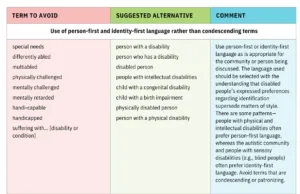
Maxim Behavioral
At Maxim Behavioral, we understand preferences of person-first or identity-first language vary person to person, just as each person is unique. The AP Stylebook, the standard for journalistic writing, recommends using thoughtful and precise language, including necessary context and background, avoiding tokenism, striving for accuracy and fairness, and making content accessible. For this reason, and for consistency and inclusive purposes, we use person-first language across our website.
As a provider of applied behavior analysis (ABA) we commit to using language that respects the individuality and dignity of every person we serve. ABA creates a path forward for children diagnosed with ASD and their families that is flexible, empathetic and individualized, encouraging confidence, connection and growth. For more information about our services near you, contact your local Maxim office.
