
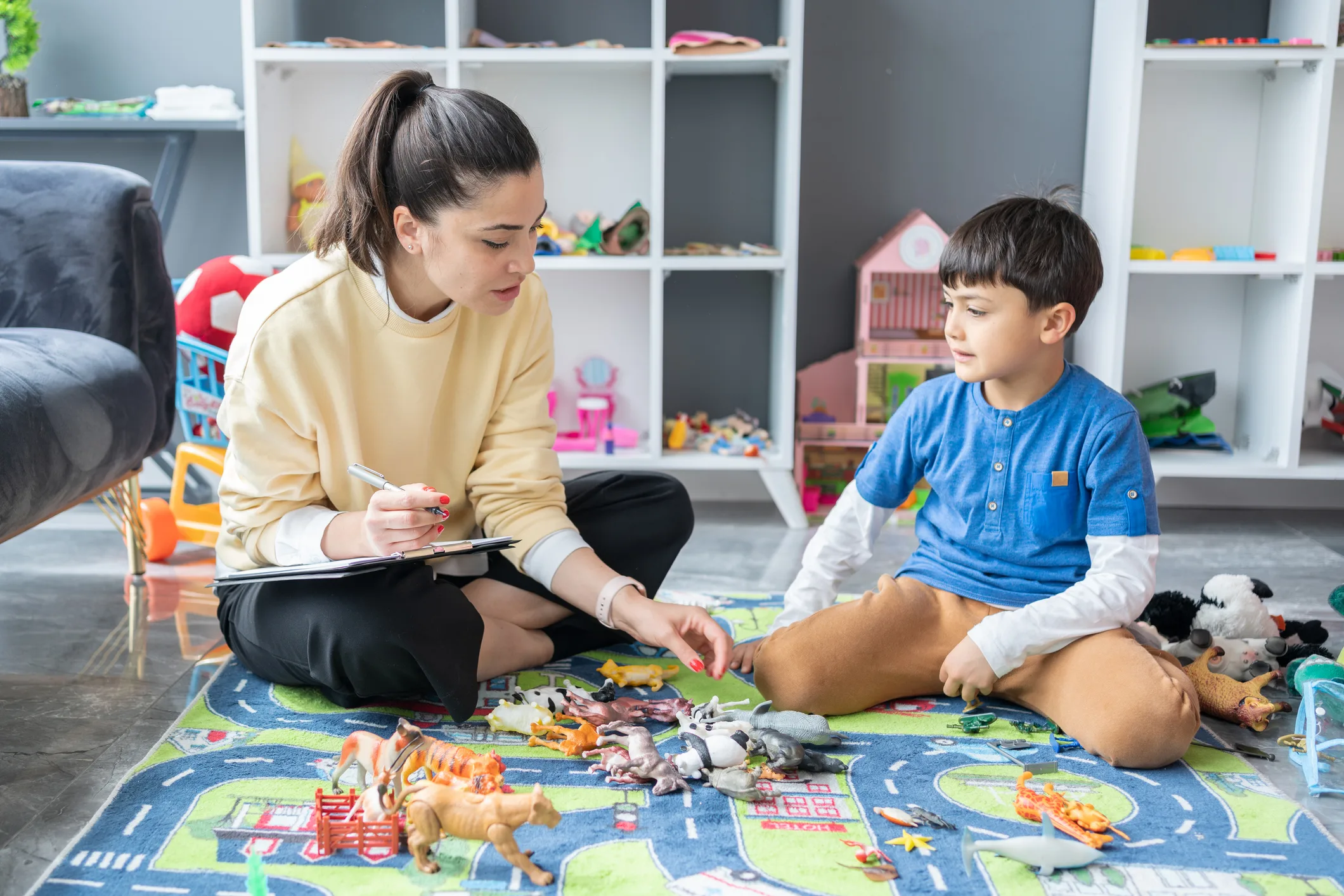
When your child starts applied behavior analysis (ABA) therapy, it is natural to wonder: how will I know it is working? The honest answer is that progress rarely looks like a dramatic switch being flipped. It looks like your child turning toward you when you call their name. It looks like fewer meltdowns at drop-off. It looks like a word you have never heard them say before. At Maxim Healthcare’s behavioral division (“Maxim Behavioral”), we want to help you know what to look for, because recognizing progress, even the quiet kind, is one of the most encouraging things a family can do.
The first six months: small steps that mean a lot
The early months of ABA are about building the groundwork. Your child’s therapy team, led by a Board Certified Behavior Analyst (BCBA), will start by getting to know your child: their interests, their communication style, what motivates them, and what gets in the way. Goals are built around your child specifically, not a checklist. Every child’s timeline is different, and that is by design. Research confirms that earlier intervention tends to produce stronger gains, with a 2025 narrative review noting that the brain’s heightened plasticity in early childhood is a key driver of progress. But meaningful growth is absolutely possible at any age. In these early months, watch for smaller, everyday signs: your child looking up when you call their name, pointing to something they want, saying a new word, using a picture card to ask for a snack, or having a shorter meltdown than the week before. These moments are milestones. Your child’s Registered Behavior Technician (RBT) is tracking them every session, and the data shapes what happens next.
Six months to one year and beyond: things start to click
Around the six-month mark, many families start to notice that the changes are getting bigger and more consistent. Your child might walk up to a peer and try to join their play. They might string two words together for the first time. They might get through a morning routine without a battle. The therapy team typically adds more complex goals at this stage, including social skills, greater independence in daily tasks, and, for many children, academic targets. A 2025 systematic review in Behavioral Sciences found consistent improvements in perspective-taking, identifying emotions and social engagement across 20 studies of ABA interventions with children and adolescents. Over time, one of the most meaningful signs of progress is generalization: your child using a skill somewhere new, with someone new, without needing to be prompted. Maybe they greet a neighbor on a walk, or navigate the grocery store more calmly than they ever have before. That is therapy working as it is meant to. Research published in PubMed confirms that early intensive behavioral intervention can produce clinically meaningful gains in adaptive behavior and intellectual functioning, and may also reduce autism severity over time. ABA does not cure autism spectrum disorder (ASD), but it builds the skills that make everyday life more manageable, more connected, and more joyful.
Your role matters more than you might think
Here is something the research makes very clear: children in ABA make faster and more lasting progress when their families are actively involved. A 2024 systematic review in Family Relations found that family-centered approaches to behavioral intervention produce particularly strong results, with parent involvement identified as a key driver of whether skills stick. That is because the goal of ABA is not for your child to perform a skill in a therapy room. It is for them to use it at the dinner table, on the playground, and at grandma’s house. The more you practice the same strategies your therapy team uses at home, using the same words, the same prompts, and the same praise, the more quickly that happens. Your BCBA will show you how. Keep talking to them about what you are seeing at home, the wins and the hard moments, because that information directly shapes what your child’s team works on next.
At Maxim Behavioral, we are committed to providing compassionate, highly specialized support that meets the complex needs of individuals with ASD and offers families the understanding, guidance and uplift they deserve. If you’re looking for guidance or want to learn more about ASD supports available through Maxim, don’t hesitate to reach out to your local office for more information.
