
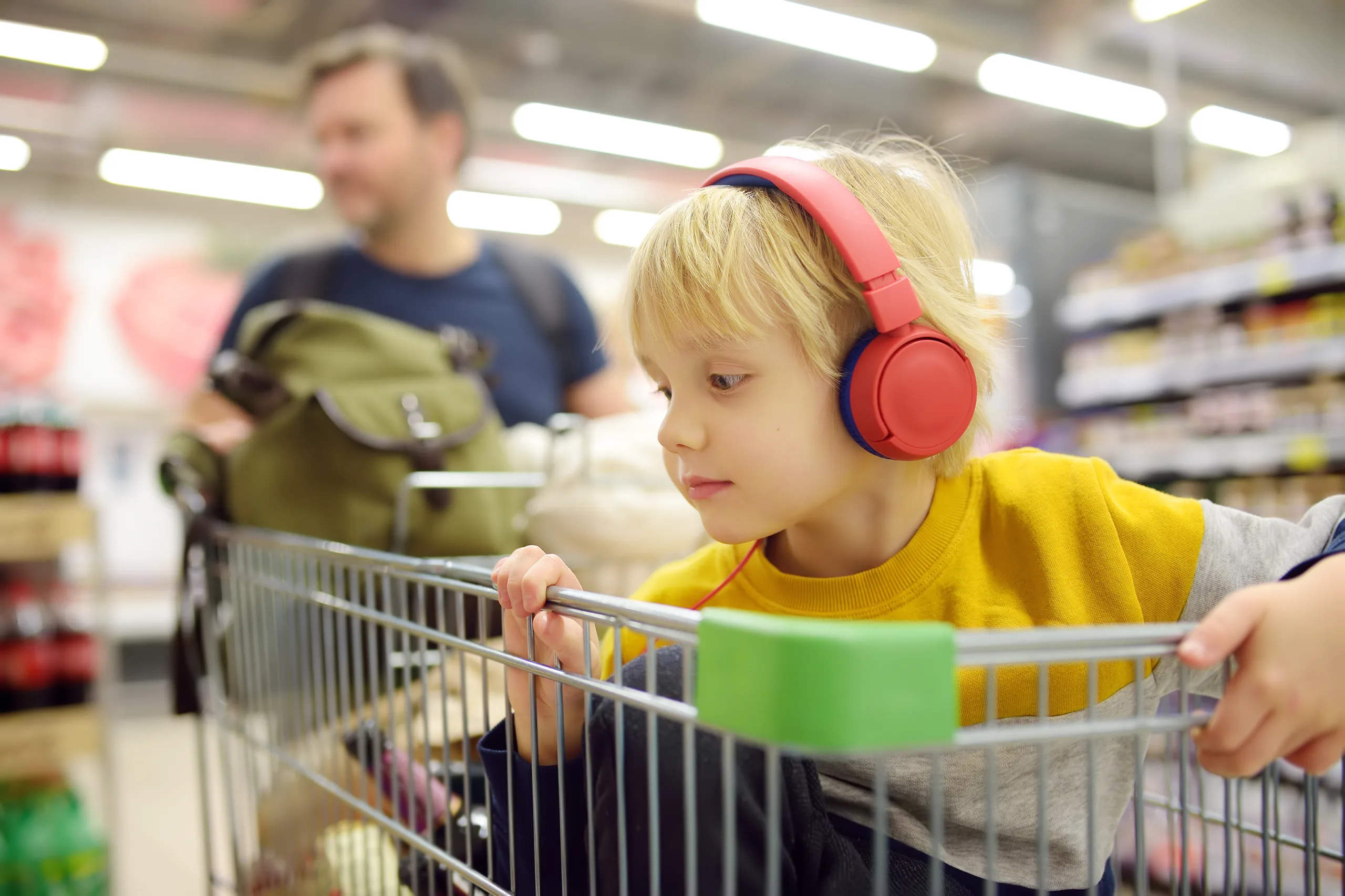
The holiday season is right around the corner, and that means holiday shopping, and maybe even Black Friday. As a busy parent, you may often have no choice but to bring your children with you as you run errands. If you have a child with autism spectrum disorder (ASD), you’ve probably noticed some challenges when it comes to shopping.
Children with ASD can easily become overstimulated by the noises, crowds and bright lights associated with a shopping trip. In this post, we explore some reasons why children with ASD often struggle with shopping in stores and provide some solutions to make the experience more successful.
Shopping challenges
Sensory overload
Many children with ASD are sensitive to sensory stimulation, and the intake when going to shopping malls or grocery stores can be overwhelming. So much is happening — bright fluorescent lights, loud noises and even strong smells can be a lot to take in. For this reason, shopping can be a painful experience for some children and even cause meltdowns. The crowds in shopping situations can often provoke anxiety in children with ASD, and the various noises can be difficult to filter out, causing sensory overload.
Routine disruption
Children with ASD often rely on routine and predictability to feel comfort. Shopping can be a change in routine that causes distress. They may become agitated or even have a meltdown, which can include crying, yelling, hitting or self-injury. A shopping trip, especially to a mall, often involves switching from one activity to another, which can be a challenge for children with ASD. This can make moving from one section of the store to another, or moving between stores, difficult for them.
Social norms
Children with ASD can struggle with social interactions. For example, they may not understand the social expectations in a store setting, like waiting in line or how to appropriately interact with employees.
Tips for shopping with your child

The overstimulating sounds, unfamiliar people and crowded conditions that accompany store outings can make shopping days an emotional meltdown waiting to happen. While you can try to tackle as much of your holiday shopping online, avoiding public shopping trips can lead to isolation for the whole family. To combat this, try these tips for shopping success.
Prepare, start small and stay flexible
It’s hard to stop yourself from just dropping by a store on the way home, but a surprise trip can make overcoming shopping challenges with children with ASD even harder. Wherever possible, let your child know ahead of time where they are going and what to expect.
Make sure your child is well rested before any shopping outing (you too!). Tiredness reduces everyone’s tolerance. When you feel your child is ready, start with a short trip to the store. Stay organized and have a checklist of the items you are searching for to cut down on the trip time.
You should also set realistic expectations with yourself and with your child, allowing you to be flexible with your plan if their behavior suddenly changes. If your child begins to feel overwhelmed, make sure they have a way to communicate when they need a break. This might be simply putting their hands over their ears or using a picture communication system. You can also seek out and take breaks in quiet areas, whether that be in a less busy area of the store or mall or even back at your car.
Make schedules your friend
Many children with ASD benefit from having a clear schedule with visual aids or a social story. For example, the night before let them know:
- We will drive to the store
- Park our car in the parking lot
- Walk into the store together
- Find our items
- Pay at the register
- Walk to our car
- Drive back home
You can even write out this schedule or print it out accompanied with visual aids for your child to hold and follow along with during the shopping trip.
Know their limits and bring supports
- Trouble with noises? Bring headphones
- Trouble with bright lighting? Bring sunglasses or a hat
- Trouble with sensory overload? Bring a weighted blanket or weighted stuffed animal to soothe them
- Need to focus their energy somewhere? Bring a fidget
Reward good behavior
If your child does well during the shopping trip, reward them with a favorite food, toy or activity. Rewarding good behavior can help encourage your child to keep up the good work during the next shopping trip.
Maxim Behavioral
Holiday shopping with a child ASD can be challenging, but with preparation, patience and the right support, it can also be a meaningful opportunity for growth. At Maxim Behavioral, we understand the unique needs of families navigating ASD and are here to help make every day experiences more manageable. Whether we’re you’re applied behavior analysis (ABA) provider or you’re just looking for practical tips, Maxim is committed to walking alongside you with compassion and care.
